

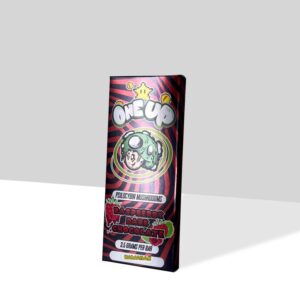
One up mushroom bars — What the name commonly refers to
One up mushroom bars is a name used by multiple websites and sellers for chocolate bars that are described as containing mushrooms — in some listings these are functional/“adaptogen” mushroom blends (lion’s mane, cordyceps, etc.), while other listings explicitly market psilocybin/psychedelic mushroom-infused chocolate bars. Product pages and shop listings for One Up style bars highlight multiple flavors and variants.
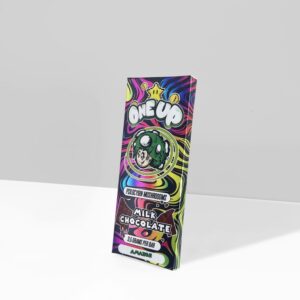
Important: claims on vendor pages about ingredients or potency are marketing statements unless backed by independent, third-party lab certificates (COAs). Packaging, logos, and flavor descriptions are not reliable indicators of actual contents.
One up mushroom bars — Why public-health agencies and news outlets have raised alarms
Edible products marketed as containing mushrooms (including chocolate bars and gummies) have been linked to serious adverse events and national recalls. In 2024–2025, U.S. public-health agencies investigated illnesses associated with mushroom-branded chocolate bars (Diamond Shruumz brand) and issued recalls after dozens of illnesses and hospitalizations were reported; FDA and CDC investigations identified unregulated or unexpected psychoactive compounds in some products. Public-health warnings have highlighted risky distribution through vape shops, smoke shops and informal online sellers, and doctors have warned about accidental ingestion by children because of candy-style packaging.
State health departments have also issued warnings about specific branded bars containing adulterants. For example, the California Department of Public Health (CDPH) has urged consumers not to eat certain mushroom chocolate products after adulteration was reported. These incidents show that unregulated mushroom-infused edibles can contain unexpected, harmful ingredients beyond what packaging claims.
One up mushroom bars — Composition, variability, and testing limits
Vendor pages may describe bars as containing measured mushroom doses (e.g., “3.5 g” per bar) or list functional mushroom blends. However, independent testing is required to verify such claims. Complex edible matrices like chocolate make simple field reagent tests inappropriate — definitive identification of psilocybin, muscimol, or other psychoactive compounds requires laboratory analysis (for example GC-MS or LC-MS) and certified COAs. In the recent outbreak investigations, regulators used lab analysis to identify unexpected compounds linked to adverse events.
Takeaway: if a COA (third-party lab report) is not available and dated for the specific lot/sku, treat product claims about potency and purity as unverified.
One up mushroom bars — Safety & harm-reduction guidance (educational)
If you are creating educational content, emphasize these harm-reduction points:
Do not assume packaging equals safety. Logos, flavor names and claims do not guarantee contents or dose.
Look for dated, third-party lab certificates (COAs) that reference the exact lot or batch cited on the package. COAs provide the only practical way to confirm what a bar contains.
Be aware of documented incidents. Recent recalls and investigations show edibles have caused severe illness (seizures, hospitalizations) and even deaths in some outbreaks; public-health guidance has recommended discarding recalled products.
Protect children and pets. Candy-style packaging increases the risk of accidental ingestion; medical professionals have warned about children inadvertently consuming these products.
If you see suspicious effects, seek medical help immediately. Describe any packaging or ingredients to medical responders — rapid treatment is essential for severe reactions.
One up mushroom bars — Legal and ethical notes
Psilocybin and many psychoactive mushroom species are controlled substances in many countries and states. Laws vary; some jurisdictions allow research or decriminalize certain natural psychedelics, while in others possession, sale, or distribution is a criminal offense. Educational content should include a clear legal disclaimer and encourage readers to check local law and public-health guidance rather than offering procurement instructions.
One up mushroom bars — What trustworthy educational content should include
To match authoritative sources and improve public trust, an educational page about One Up style bars should include:
Clear statement of purpose (education/harm-reduction).
Inline citations to government warnings, recall notices, and reputable news coverage (e.g., CDC, FDA, CDPH, major news outlets).
Emergency response steps and links to local poison control / health department resources.
Quick summary (for a page snippet)
One up mushroom bars: name used for chocolate bars marketed with mushroom ingredients (functional or psilocybin). Packaging claims vary and are often unverified — recent nationwide recalls and public-health investigations show some mushroom edibles have caused serious illness. For safety, prioritize official public-health guidance, third-party lab reports, and immediate medical attention for severe reactions.
📌 FAQ: One Up Mushroom Bars (Educational Use Only)
Q1: What are One Up Mushroom Bars?
A: One Up Mushroom Bars are chocolate products often marketed as containing psychedelic or functional mushrooms. They are styled like candy bars, which has raised concerns about accidental ingestion, especially by children.
Q2: Are One Up Mushroom Bars safe to eat?
A: No. Public health agencies (CDC, FDA, CDPH) have issued warnings after people reported seizures, poisonings, and hospitalizations linked to mushroom edibles. Ingredients may not match labels, making them unsafe.
Q3: Do One Up Mushroom Bars really contain mushrooms?
A: Labels often claim they contain psilocybin or Amanita muscaria. However, FDA lab tests have found undeclared compounds such as muscimol, psilocin, and pregabalin, which means you can’t trust the packaging.
Q4: What flavors do One Up Mushroom Bars come in?
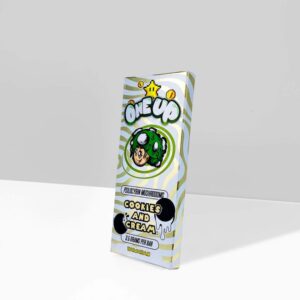
A: Online listings mention flavors such as vanilla bean, berry, cookies & cream, and cone versions. These names are marketing terms; safety does not depend on flavor.
Q5: Where can you buy One Up Mushroom Bars?
A: They are sometimes advertised online or in smoke shops, but authorities strongly advise against buying or consuming them. The products are unregulated and may be illegal in many regions.
Q6: Are One Up Mushroom Bars legal?
A: In most places, psilocybin-containing products are illegal. Even Amanita-based versions fall under legal gray areas. The FDA has banned Amanita compounds like muscimol, making these products risky from a legal standpoint.
Q7: What should I do if a child eats a One Up Mushroom Bar?
A: Call 911 or your local emergency services immediately. In the U.S., you can also call Poison Control at 1-800-222-1222. Quick medical help is essential.
Q8: What do reviews of One Up Mushroom Bars say?
A: Online reviews are inconsistent and not reliable for safety. Many highlight psychoactive effects, but these reports should not be treated as medical or trustworthy evidence.
Q9: Why are One Up Mushroom Bars compared to Mario or video game themes?
A: Marketing often uses “One Up” and Mario-style graphics to make products eye-catching. This raises concerns because the packaging can appeal to children and teenagers.
🔎 PAA-style Short Snippets
Are One Up mushroom bars real or fake?
→ They are real products but often contain undeclared psychoactive substances.
Do One Up mushroom bars contain psilocybin?
→ Some claim to, but lab tests show ingredients don’t match labels.
Can One Up mushroom bars cause illness?
→ Yes. Reported effects include seizures, vomiting, and hospitalizations.
What does the FDA say about mushroom chocolate bars?
→ The FDA and CDC have both issued consumer warnings and recalls.


Reviews
There are no reviews yet.